
Science word walls are not just classroom decor. They are visual support systems for helping students speak, read, write, and think like scientists.
Science word walls do not need to be cute boards that take 47 hours, a color printer, and a full Cricut meltdown to create. They can be simple, useful classroom tools that help students actually use science vocabulary instead of just memorizing it for a quiz.
In middle and high school science, vocabulary shows up everywhere. Students need the right words to explain lab results, analyze data, write CER responses, understand readings, and talk through big concepts. A good science word wall gives them a place to look back, make connections, and build confidence with the language of science.
Where Should You Put a Science Word Wall?
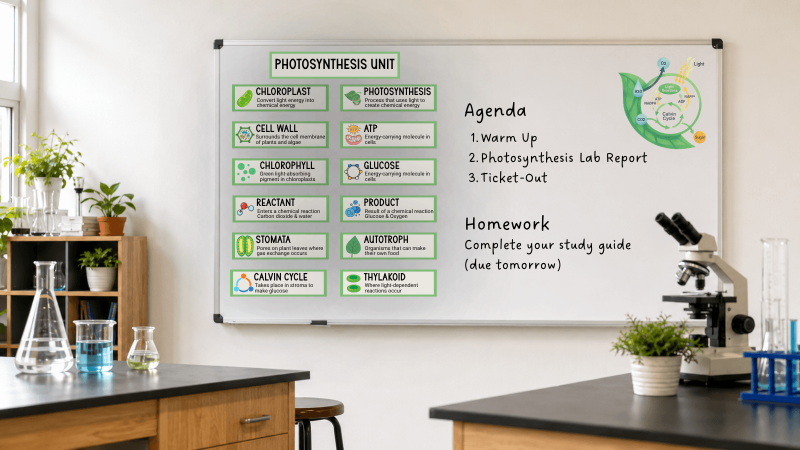
Before you start printing vocabulary cards and climbing on desks with a stapler, think about where your science word wall will actually be useful.
The best place for a word wall is somewhere students can see it and use it. That might sound obvious, but we have all seen classroom displays that look great in August and then slowly become background wallpaper by October.
Near your front board, beside a student work area, by lab stations, or on a visible bulletin board can all work. The goal is not to fill empty wall space. The goal is to give students a quick reference during discussions, labs, writing, and review.
Keep the words large enough and low enough for students to actually read. A beautiful word wall above the cabinets might look nice, but if students need binoculars to find “homeostasis,” it is probably not helping much.
I like to move my words around on my science word walls a lot, depending on how I am using them that day. I highly recommend using magnetic push pins, like these, to secure your words to metal surfaces. They are amazing for everything.
If wall space is limited, use cabinet doors, the back of your classroom door, the side of a whiteboard, a pocket chart, a magnetic board, or even a rolling board. You can also keep current unit words in the most visible spot and move older words to a review area or keep them organized in plastic baggies for end of year review.
Science word walls work best when they are placed where students can actually use it, not where it simply looks cute in August.
What Should Go on Science Word Wall Cards?
Cards for science word walls should be simple, clear, and easy to read from across the room. This is not the place for tiny paragraphs, textbook definitions, or 37 words crammed onto one card because we got ambitious at 10:42 p.m (been there, done that).
Each card should include the vocabulary word in large, readable text, a very short student-friendly definition or clue, and a picture, symbol, or diagram that connects to the word.
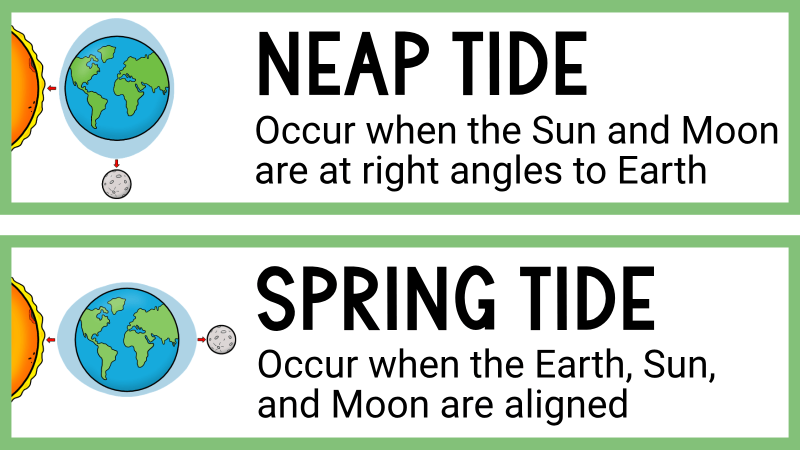
That visual piece matters. A quick image gives students another way to remember the term, and it can be especially helpful for English language learners who benefit from repeated exposure to academic language paired with visual support.
The visual does not need to be fancy. A simple sketch of a cell membrane, a food chain, a volcano, or a thermometer can help students quickly connect the term to the science idea.
The biggest thing to remember is that good science word walls are not cluttered. Too many words can turn into visual noise, especially for students who already struggle with vocabulary. For most units, 8 to 12 important terms is a great place to start. Choose the words students will actually need for class discussions, labs, readings, writing, and review.
Free Science Word Parts Word Wall Cards
If you want to help students go one step deeper with science word walls, word part cards are a great addition to your science word wall.
Instead of focusing only on full vocabulary terms, these cards help students break down the pieces inside science words. Prefixes, suffixes, and root words show up again and again, and once students start recognizing them, unfamiliar vocabulary feels a lot less intimidating.
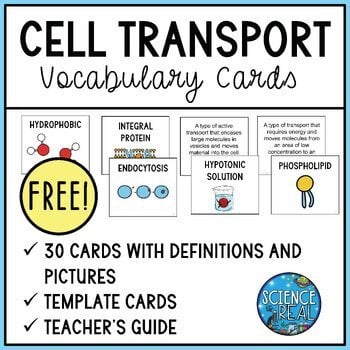
I created a free set of Science Word Parts Word Wall Cards to help with exactly this. Each card includes a word part, a student-friendly meaning, a simple visual, and two science example words. The set includes 96 cards with common science prefixes, suffixes, and root words, plus a blank template page so you or your students can create your own.
Use them on a classroom word wall, bulletin board, vocabulary station, notebook page, or review board. You can display the full set or pull only the cards that match your current unit.
You can grab the free Science Word Parts Word Wall Cards below and use them as a simple, visual vocabulary support in your classroom.
Use Science Word Walls for Review and Assessment
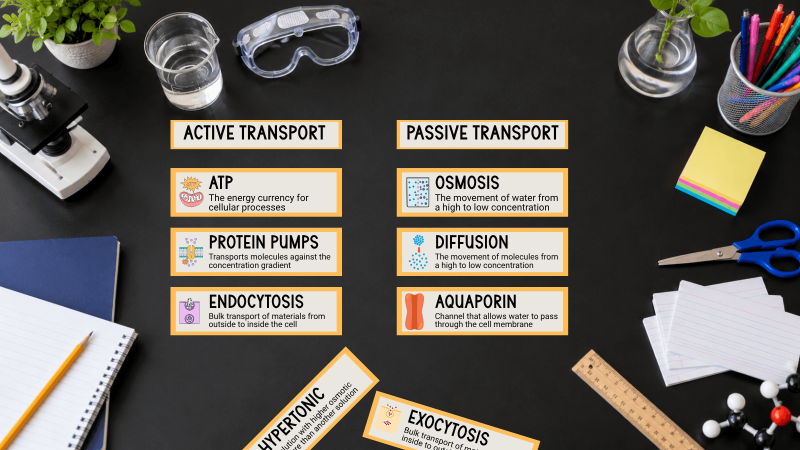
Science word walls earn their wall space when students actually use the terms. Your word wall should not just sit there looking organized while everyone ignores it. One of the easiest ways to make a word wall useful is to connect it to quick review, writing, and assessment routines.
Try using your science word wall for simple prompts like:
- Use three words from the wall in your exit ticket.
- Choose two connected words and explain how they relate.
- Find one word that connects to today’s activity and explain how and why.
- Write a CER response using at least four words from the wall.
- Sort words into categories before a quiz.
- Play a quick review game using the wall.
These do not need to be long activities. A two-minute warm-up, a quick lab reflection, or a short exit ticket can help students revisit vocabulary and make connections throughout the unit.
Science word walls are especially helpful when students need to explain their thinking. Instead of just memorizing definitions, students start using science vocabulary in context, which is where the real learning happens.
My Favorite No-Prep Way to Use Science Word Walls
This is one of my favorite ways to use science word walls because it takes almost no prep and works beautifully as a last-minute sub plan, early-finisher activity, or ongoing vocabulary review. You might get a few student groans at first, but by the end of the year, a lot of students are genuinely thankful they have a full set of science vocabulary cards to study from.
At the beginning of each unit, I display the science word wall and have students write down the terms or take a quick picture. Then, students create one index card for each vocabulary word.
- Front of the card: Students write the term and draw an image that represents the word. This can be a simple sketch, a labeled picture, or a full diagram. Some students really shine with this part, and I usually offer a little extra credit if they add color.
- Back of the card: Students write a definition and three additional facts or details that connect to the term.
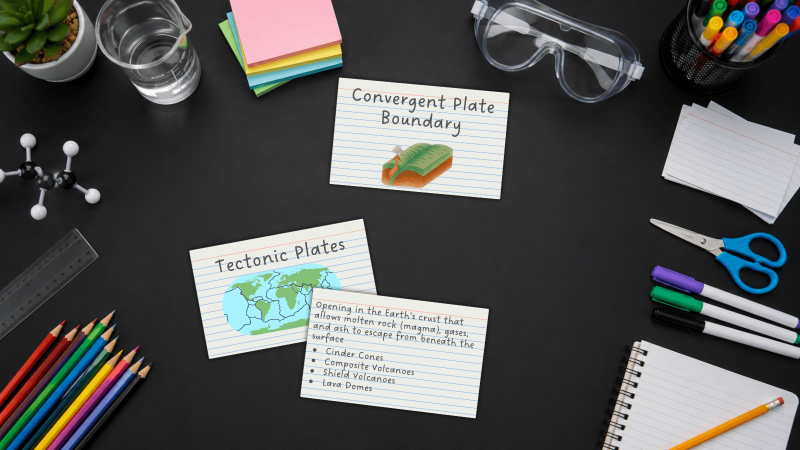
After the unit exam, I collect the cards for a grade. I usually grade each card out of 5 points: 2 points for the front and 3 points for the back. I also give 1 extra credit point if the image is colored.
This works because students are not just copying definitions and calling it a day. They are interacting with the vocabulary, making visual connections, and building a study tool they can actually use. I have students save their cards all year, and when final exam review rolls around, those cards become incredibly helpful for review games, partner practice, flashcard sessions, and quick warm-ups.
Common Science Word Wall Mistakes to Avoid
Science word walls are meant to help students, but they can easily turn into classroom wallpaper if we are not careful. Here are a few common mistakes to avoid:
- Putting up too many words at once: Start with the most important 8 to 12 terms instead of overwhelming students with the entire unit vocabulary list.
- Using tiny text: If students cannot read it from their seats, they probably will not use it.
- Adding long textbook definitions: Keep definitions short, student-friendly, and easy to understand.
- Alphabetizing every word: In science, grouping words by concept is usually more helpful because students can see how ideas connect.
- Never referring to it: Point to the wall during lessons, labs, writing, and review so students know it is actually there to help them.
- Leaving old words up without a system: Keep current unit words front and center, then move older words to a review area, notebook page, binder, or digital version.
A good science word wall does not need to be fancy. It just needs to be clear, readable, connected to instruction, and easy for students to use.
Final Thoughts on Science Word Walls
Science word walls do not have to be complicated to be useful. You do not need a giant bulletin board, a perfect classroom theme, or a laminator running for three straight hours. Start small, choose the words students actually need, make them easy to read, and build them into the routines you already use.
When students see vocabulary as something they can use, not just something they have to memorize, science words start to feel a lot less intimidating. A good science word wall gives students a place to look back, make connections, and explain their thinking with more confidence.
And that is really the goal. Not a perfect wall. Not a Pinterest moment. Just a simple, useful support that helps students speak, read, write, and think like scientists.