
The best plants for the classroom are the ones that can survive weekends, winter break, fluorescent lighting, and the fact that no one watered anything because it was spirit week.
If you want a little greenery in your room without adding “full-time plant parent” to your teacher job description, these low-maintenance houseplants are a good place to start.
Why Add Plants to Your Classroom?
Plants are not required classroom decor, of course. But they can make a classroom feel calmer, fresher, and a little more alive.
There is also a reason so many teachers love having plants in their rooms. Indoor plants can help create a more welcoming learning environment, give students something real to observe, and make science feel a little less abstract.
Classroom plants can also support simple routines and conversations, such as:
- Observing growth over time
- Noticing changes in leaves, roots, and stems
- Discussing light, water, and plant needs
- Connecting real plants to photosynthesis, adaptations, and plant structures
- Giving students small ownership jobs, like checking soil or rotating a plant toward the light
The best plants for the classroom do not need to turn your room into a greenhouse. Even one or two low-maintenance plants can make the space feel more inviting.
What Makes a Good Classroom Plant?
When choosing the best plants for the classroom, fancy is not the goal. The best classroom plants are usually the ones that can handle a little neglect.
Before bringing a plant into your room, look for one that is:
- Low maintenance
- Tolerant of missing 2+ weeks of watering
- Able to handle low or indirect light
- Not too messy or fragile
- Easy to propagate or share with students
- Safe to place around students
Classrooms are not exactly calm greenhouse environments, so the goal is to choose plants that can handle real teacher life.
Best Plants for the Classroom
When choosing the best plants for the classroom, I like to think about what can survive real classroom conditions: inconsistent watering, weird lighting, long weekends, and the occasional “I meant to water that yesterday” moment.
The best classroom plants are usually low-maintenance, forgiving, and easy to tuck onto a shelf, windowsill, lab table, or teacher desk. Here are a few classroom plants that can work well for teachers who want greenery without adding one more complicated thing to their day.
1. Golden Pothos
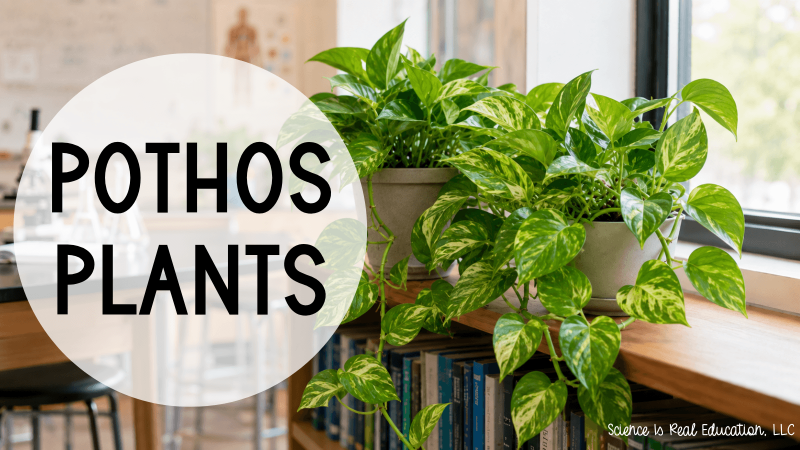
Golden pothos is one of my favorite low-maintenance classroom plants because it is forgiving, fast-growing, and easy to propagate, which is exactly why it belongs on a list of the best plants for the classroom. It has trailing vines with heart-shaped green leaves, often with yellow or lighter green variegation, so it adds a lot of life to a classroom without needing a lot of attention.
Pothos can handle low to bright indirect light, which makes it a good choice for classrooms that do not have perfect windows. Let the soil dry out between waterings, and it will usually bounce back even if you forget about it for a bit. I literally left mine in my classroom over the summer and it survived!
Pothos is also super easy to propagate. Snip off a cutting, place it in a glass of water, and watch it grow roots in less than two weeks.
One safety note: pothos should not be eaten and can be irritating if chewed, so exercise caution with younger students.
2. Snake Plant
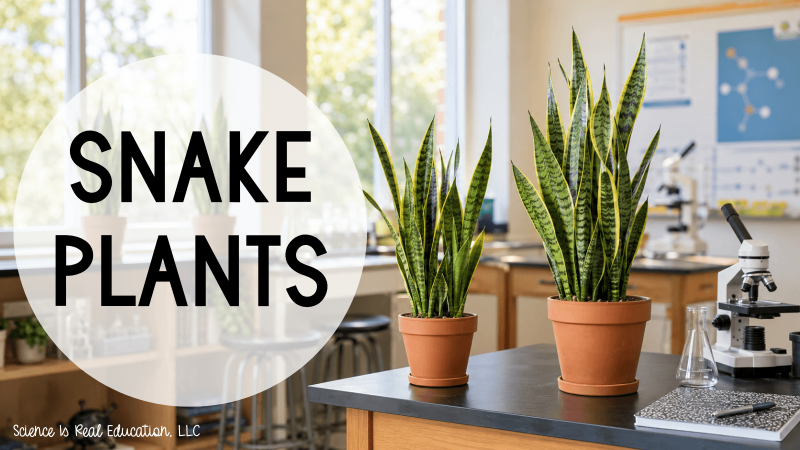
Snake plant is another strong choice if you are looking for low-maintenance classroom plants, and it easily belongs on a list of the best plants for the classroom. It has tall, upright leaves that look neat and structured, so it works well in a corner, near a teacher desk, or on a plant stand where it will not take over your space.
Snake plants can handle low light, indirect light, and missed waterings better than many houseplants. In fact, overwatering is usually a bigger problem than underwatering, so this is a good option for teachers who want a plant that does not need constant attention.
Safety note: snake plants should not be eaten and may cause irritation if chewed, so place them where students are not likely to touch or taste the leaves.
3. Spider Plant
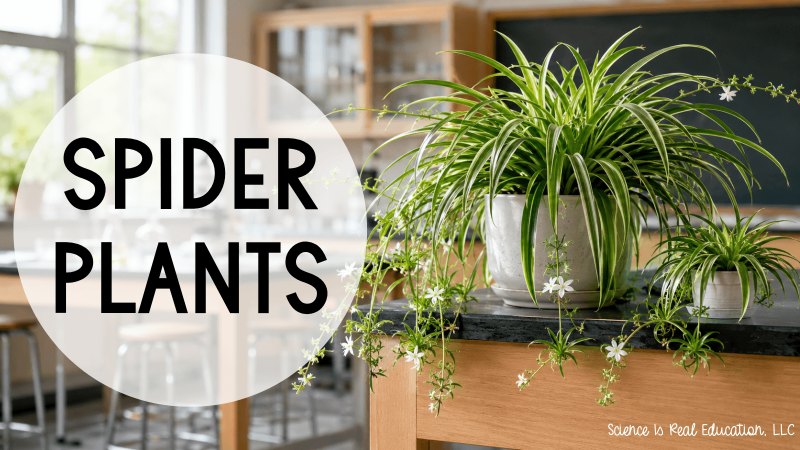
Spider plants are one of the best classroom plants if you want something easy, cheerful, and fun for students to observe. They have long, arching leaves and can produce little plantlets, often called spider plant babies, that hang from the main plant.
Never underestimate the motivating power of spider plant babies! Students love checking on them, watching them grow, and seeing how a tiny plantlet can eventually become a whole new plant. You can even propagate the babies and send them home with students.
Spider plants are one of the best plants for the classroom because they do well in bright, indirect light but can usually tolerate lower light, too. Let the soil dry slightly between waterings, and trim off any brown tips or tired-looking leaves as needed. They are also an easy connection to plant reproduction, growth, and life cycles.
4. Cast Iron Plant
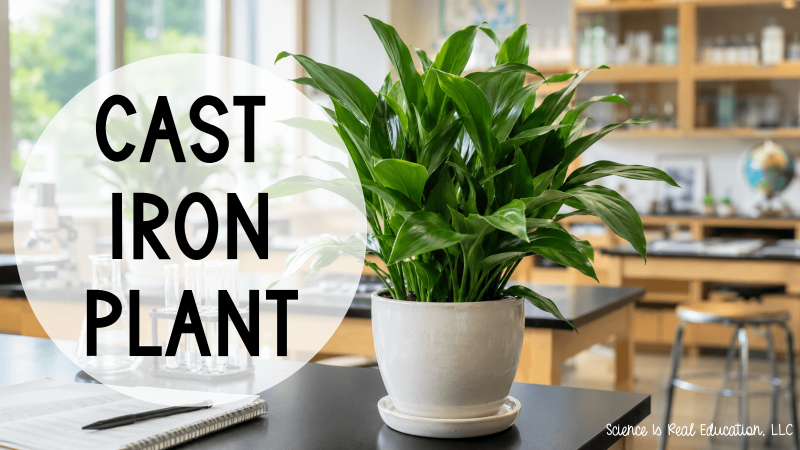
The cast iron is a very low maintenance plant that earns its name. If you are looking for one of the best plants for the classroom because your room has low light, inconsistent watering, or general school-year chaos, this is a strong choice.
Cast iron plants have dark green leaves and a simple, sturdy look. They grow slowly, which is actually a classroom bonus because they will not take over a shelf or need constant repotting.
This plant does well in low to indirect light and prefers to dry out between waterings. It is a good option for teachers who want a classroom plant that looks impressive without needing a dramatic care routine.
5. Lucky Bamboo in Water
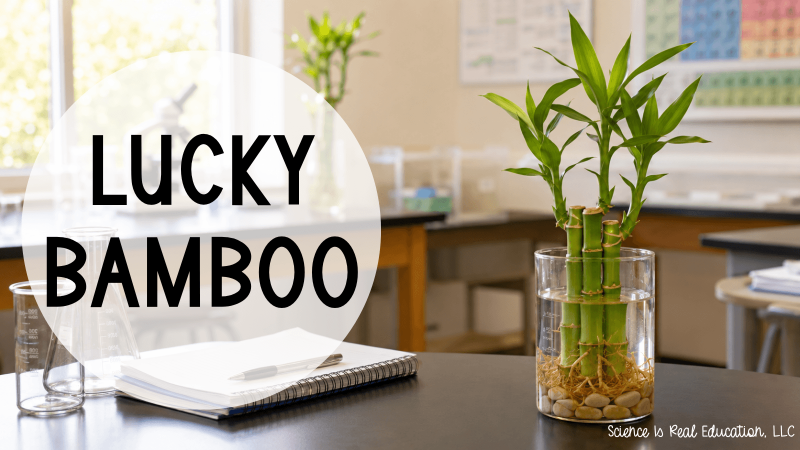
Lucky bamboo is a great low-maintenance classroom plant because it can grow in water instead of soil, which makes it one of the best plants for the classroom if you want something simple and mess-free. That means no messy potting mix, no guessing whether the soil is dry, and no little trail of dirt across your counter after someone “just wanted to check it.”
It does best in bright, indirect light, but it can usually handle lower classroom light, too. Keep the roots covered with water, change the water every week or two, and use pebbles or stones to help hold the stems upright.
One note: lucky bamboo is not actually bamboo. It is a type of dracaena, so it should not be eaten.
6. ZZ Plant
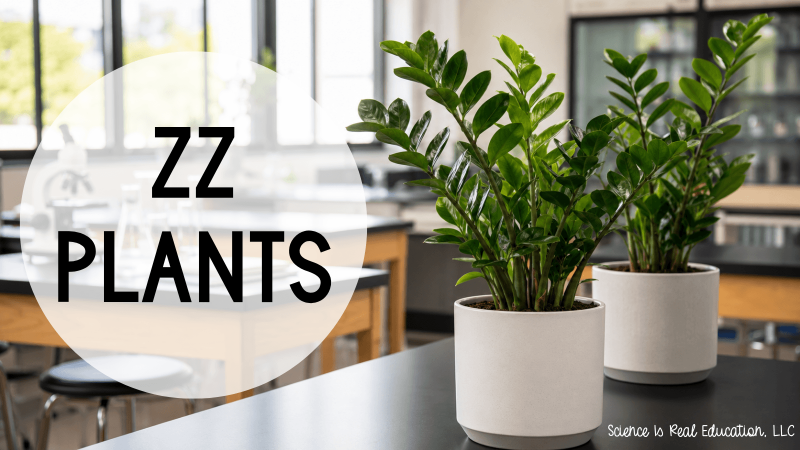
The ZZ plant is one of the best plants for the classroom if you want something that can handle low light, missed waterings, and the general unpredictability of teacher life like a true champ. It has glossy green leaves, a clean upright shape, and a reputation for being very hard to kill.
ZZ plants store water in thick underground rhizomes, so they do not need frequent watering. In most classrooms, it is better to let the soil dry out between waterings than to water it too often. This makes it one of the best classroom plants for teachers who want greenery without a complicated care routine.
Safety note: ZZ plants should not be eaten and may cause irritation if chewed, so place them where students can observe the plant without handling it.
Easy Ways to Use Classroom Plants in Science

The best plants for the classroom do not have to just sit on a shelf looking cute. They can also become easy, low-prep science connections throughout the year.
You can use classroom plants to help students:
- Observe plant structures like roots, stems, leaves, and flowers
- Compare leaf shapes, stem types, colors, and growth patterns
- Track plant growth over time with simple measurements or sketches
- Observe stomata under a microscope using leaf impressions
- View plant cells under a microscope during a cell structure lesson
- Measure transpiration rates with simple bagging or mass-change investigations
- Connect real plants to photosynthesis, reproduction, adaptations, and plant needs
Even a quick “What do you notice?” moment can help students connect science ideas to something real in the room.
If you want students to go deeper than “this plant is cute,” I also have plant activities that help students connect real plant observations to plant structures, adaptations, and life science vocabulary.

I have a confession: I’m a complete plant nerd
One last note: I am very much a houseplant person. I have more than 100 plants at home, so this is one of those topics where my science teacher brain and plant-loving brain fully overlap.
If you are trying to choose the best plants for the classroom and have a question about what might work in your space, feel free to reach out. I am always happy to talk classroom plants, especially if it helps one more teacher find a plant that fits their room, their light, and their actual teacher-life schedule.