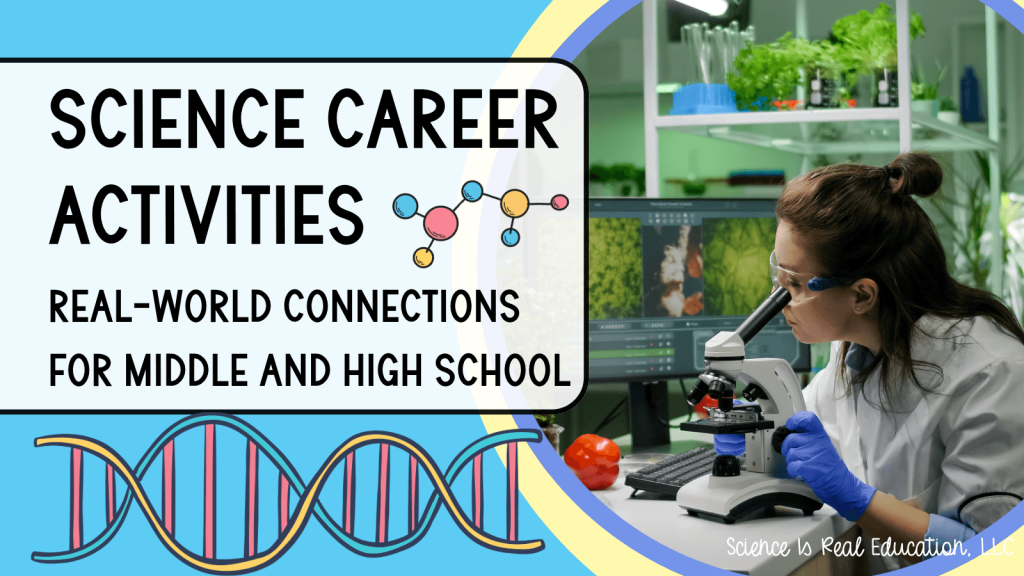
If your students have ever asked, “When am I ever going to use this?” during a science lesson, science career activities are one of the easiest ways to answer that question without stopping your entire unit.
Science is full of real-world connections, but it is not always easy to pause in the middle of a unit and build a whole career lesson from scratch. That is where short, focused career connections can be so helpful. They give students a chance to see how the topics they are learning connect to real scientists, real jobs, and real problems beyond the classroom.
Why Science Career Activities Matter
Science can sometimes feel abstract to students, especially when they are learning vocabulary, labeling diagrams, solving problems, or trying to understand processes they cannot always see happening in real time. Science career activities help students connect those classroom concepts to actual work people do in the real world.
Career connections can help students:
- See how science shows up in real jobs, not just textbooks
- Understand why topics like cells, ecosystems, chemical reactions, weather patterns, energy, forces, and Earth systems matter
- Discover science careers they may not have known existed
- Build stronger real-world connections to the content
- Think about future career paths in medicine, conservation, biotechnology, engineering, environmental science, forensics, agriculture, public health, and more
- Answer “Why are we learning this?” in a practical, meaningful way
Not every student is going to become a doctor, engineer, research scientist, or veterinarian, and that is completely fine. But all students benefit from seeing that science connects to real people, real problems, and real work happening beyond the classroom.
When to Use Science Career Activities
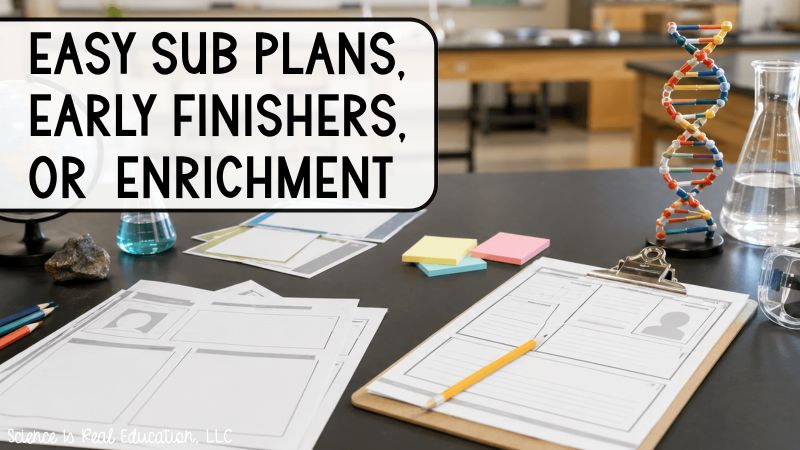
One of the best things about science career activities is that they do not have to take over your lesson plans. You can use them as a quick way to add real-world connections without rearranging your whole week.
They work especially well for:
- Early finisher work
- Sub plans
- After-test activities
- Homework
- Enrichment
- Unit extensions
- Career exploration days
- Before breaks
- Independent work
- Extra credit
- Choice boards
Science career activities are especially helpful when you want students doing something meaningful, but you do not have the time, energy, or available brain space to build an entire new lesson from scratch. A short career reading or worksheet can give students a useful connection to the content while still being simple enough to assign, print, or leave with a sub.
Science Topics That Connect to Real Careers

Almost every science unit has a career connection hiding inside it. Sometimes it just takes a quick pause to help students see that the topic they are learning in class connects to real work people do outside of school.
- Biology: Students can connect cells, DNA, genetics, evolution, ecology, and classification to careers in medicine, biotechnology, conservation, environmental science, wildlife biology, genetic counseling, and research.
- Earth Science: Topics like weather, climate, rocks and minerals, plate tectonics, oceans, natural hazards, and space science can connect to careers such as meteorologist, geologist, oceanographer, seismologist, volcanologist, climate scientist, and astronomer.
- Chemistry: Students can see how matter, chemical reactions, solutions, acids and bases, food chemistry, forensic chemistry, and materials science connect to careers in medicine, engineering, pharmaceuticals, environmental testing, product development, and forensic science.
- Physics: Topics like forces, motion, energy, electricity, magnetism, waves, engineering design, and space exploration can connect to careers in engineering, medical imaging, aviation, robotics, renewable energy, and technology.
These connections do not need to be complicated. Even a short reading, reflection question, or real-world scenario can help students see that science is not just a list of topics to get through. It is connected to real jobs, real discoveries, and real problems people are working to solve.
What Makes a Good Science Career Activity?
A good science career activity should feel connected to what students are already learning, not like a random extra assignment that gets dropped into the middle of a unit. If students are learning about genetics, the career connection should help them see how genetics is used in the real world. If they are learning about ecosystems, the activity should connect to careers that involve conservation, fieldwork, environmental research, or wildlife management.
The best science career activities are also simple enough to actually use. They do not need to take three class periods, require a giant poster, or send students down an internet research rabbit hole. A short reading, a real-world career connection, and a few thoughtful questions can be enough to help students make the connection.
I also like career activities that give students something to do beyond just copying facts about a job. Students should be able to read, think, respond, and reflect on how the career connects to the science topic. That makes the activity feel more meaningful than “pick a science job and make a slideshow,” especially when you need something for independent work, sub plans, enrichment, or early finishers.
Ready-to-Use Science Career Activities
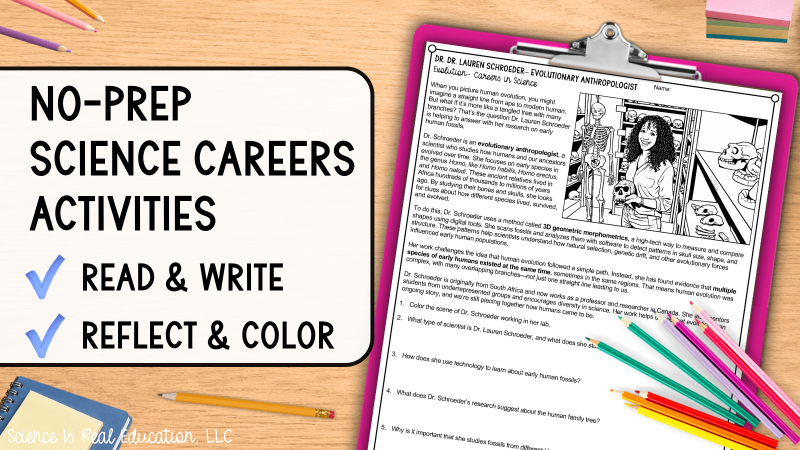
If you want the career connections already built for you, ready-to-use science career activities can make this much easier to add into your week. Instead of trying to find a career, write a reading, create questions, and make it all fit your current unit, you can use a short activity that is already connected to the science topic you are teaching.
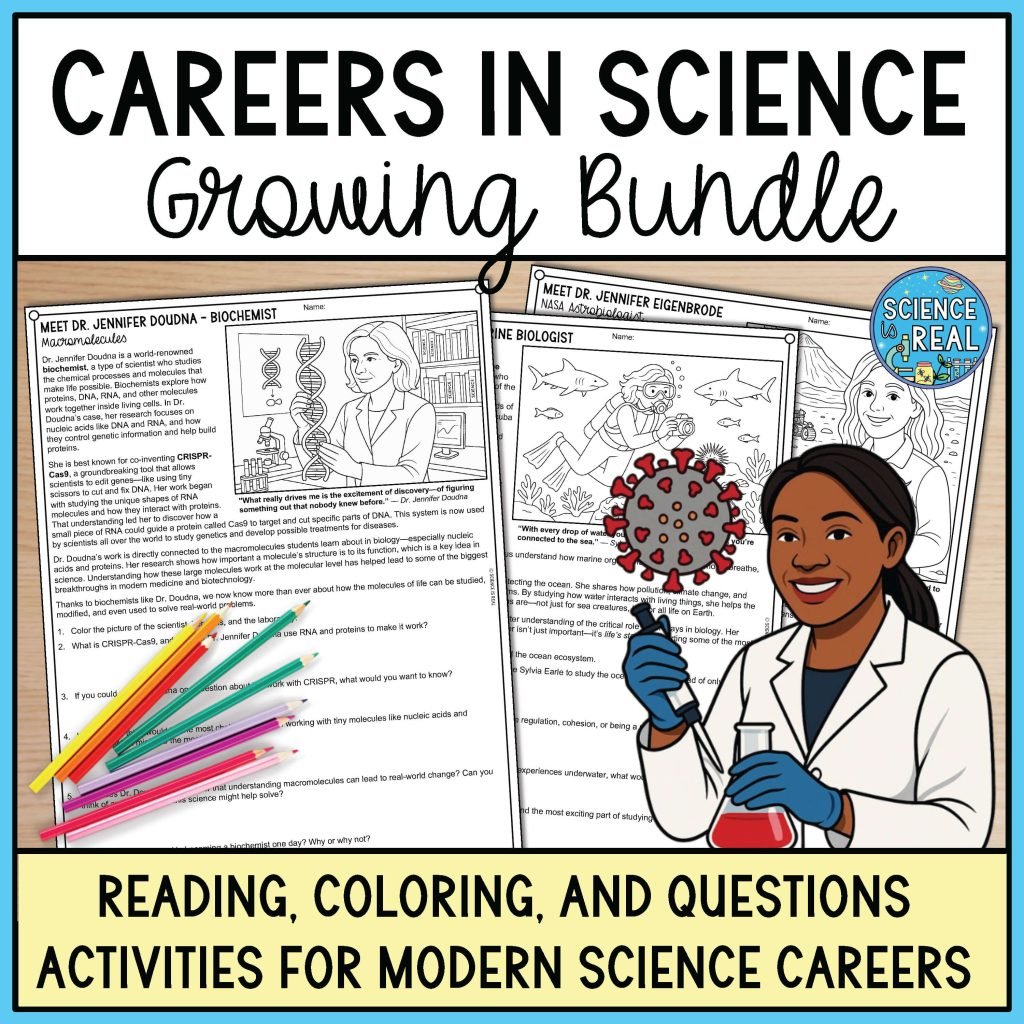
I currently have a set of biology careers in science activities that connect directly to common life science topics, including cells, DNA, genetics, evolution, classification, ecology, biodiversity, symbiosis, keystone species, energy in ecosystems, ecological succession, and the carbon cycle.
These activities are designed to fit into the lessons you are already teaching. They work well for sub plans, early finishers, enrichment, homework, after-test activities, career exploration days, or quick unit extensions.
As I add more science disciplines, this will continue to grow into a larger collection of career-connected science activities for middle and high school teachers.
These biology careers in science activities help students see how cells, DNA, genetics, evolution, ecology, and other biology topics connect to real scientists and real careers.
They are no-prep, flexible, and easy to use when you need something meaningful that does not require building a whole new lesson from scratch.
Each activity includes:
- A short student-friendly reading
- Reflection and comprehension questions
- A coloring activity
- PDF and Google Slides options
Perfect for sub plans, early finishers, enrichment, homework, career exploration, or those “I need something useful today” moments.
-
Biology Careers in Science Activities Bundle
Original price was: $49.75.$29.75Current price is: $29.75.
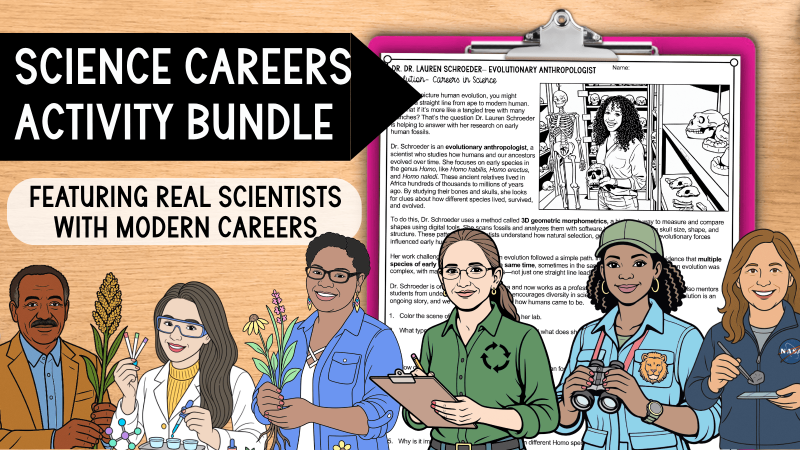
An added bonus is that many of the scientists featured in this activity bundle are diverse and modern, helping students celebrate diversity in science and see a wider range of people doing meaningful work in the field.
Get a free sample activity about Dr. Diana Klaser Cheng, a flavor scientist, here.
Easy Ways to Add Career Connections to Science Class
Adding career connections to your science class does not have to mean creating a huge project or stopping your regular unit plans. Sometimes the small connections are the ones that are easiest to keep using.
You could ask one career connection question as an exit ticket, such as, “How might a scientist use this concept in their job?” You could start a unit by introducing a related career, like a genetic counselor during genetics, a meteorologist during weather, or a conservation biologist during ecology. You could also use a short career reading after a challenging topic to help students see where the content shows up outside of class.
Career connections can also work well as flexible classroom tools. Add a few career examples to a bulletin board, let students choose a career-connected extension activity, or keep short readings available for early finishers, sub plans, after-test days, or those weird schedule days when you need something meaningful but manageable.
You can also point students to a trusted career resource, like the Bureau of Labor Statistics Occupational Outlook Handbook, when you want them to explore job duties, education paths, and career outlooks for different science fields.
The goal is not to turn every science lesson into a career day. It is simply to help students see, little by little, that the science they are learning connects to real people doing real work.
A Simple Way to Add Real-World Science
Science career activities are a simple way to make science feel more connected to the real world without adding a huge project to your already full plate. They help students see that the topics they learn in class are not just vocabulary words, diagrams, formulas, or test questions. They are connected to the work scientists are doing every day.
Even if students do not know what career they want yet, they benefit from seeing what is possible. A short career connection can help answer “When am I ever going to use this?” in a way that feels practical, meaningful, and easy to fit into the science lessons you are already teaching.
Check out some more fun lessons!
-
Biology Careers in Science Activities Bundle
Original price was: $49.75.$29.75Current price is: $29.75. -

Science Skills Reset Stations
$4.99 -
Women in Science Activities
Original price was: $5.99.$3.00Current price is: $3.00. -

6 No-Prep Science Sub Plans for ANY Science Topic
$5.99