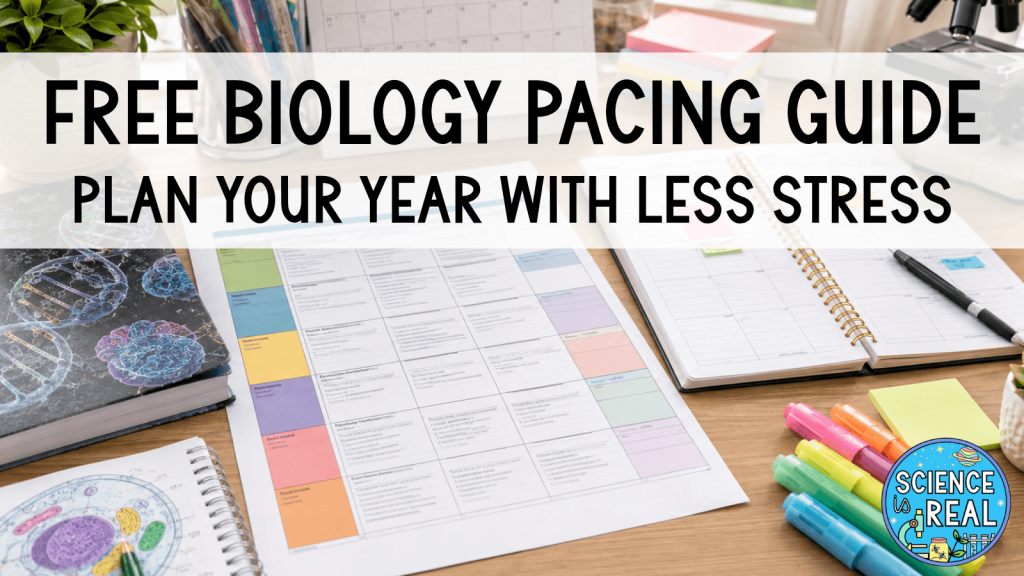
If you teach high school biology, you already know that planning the year is not as simple as listing your units in order. You have to think about standards, labs, review days, assessments, school interruptions, and how each topic builds into the next.
That is why having a biology pacing guide can be so helpful. A clear biology pacing guide gives you a starting point for mapping out your year, organizing your units, and seeing how your course can flow from the first week of school to the final unit.
A Biology Pacing Guide Makes Planning Less Overwhelming

Planning a full year of biology can feel overwhelming fast. There are so many important topics to fit in: cells, cell energy, genetics, heredity, evolution, classification, ecology, labs, review days, assessments, shortened weeks, and all the little “real life of teaching” things that never show up neatly on a calendar.
And if you are starting with a blank planner, it can be hard to know where everything should go.
What should come first? How long should you spend on each unit? Where do labs and review days fit? How do you make sure students have enough background knowledge before they move into more complex topics?
That is where a biology curriculum map and pacing guide can make a huge difference.
Why You Need a Biology Pacing Guide
A biology pacing guide is more than a list of topics. It is a roadmap for your school year.
When you can see the year laid out in front of you, it becomes much easier to plan with purpose. You can decide how much time to spend on each unit, where to build in labs and activities, when to review, and how to keep your class moving without feeling like you are constantly planning one day ahead.
A strong high school biology pacing guide can help you:
- Organize your biology units in a logical sequence
- Estimate how many days to spend on each major topic
- Build in time for labs, activities, review, and assessments
- Make sure foundational concepts come before more challenging ones
- Avoid rushing through important units at the end of the year
- Adjust your plans when schedules change, because they always do
Biology has a lot of moving pieces, and every school calendar is a little different. A pacing guide gives you a flexible plan you can follow, adjust, and come back to when the year starts feeling busy.
What Is Included in the Free Biology Pacing Guide?
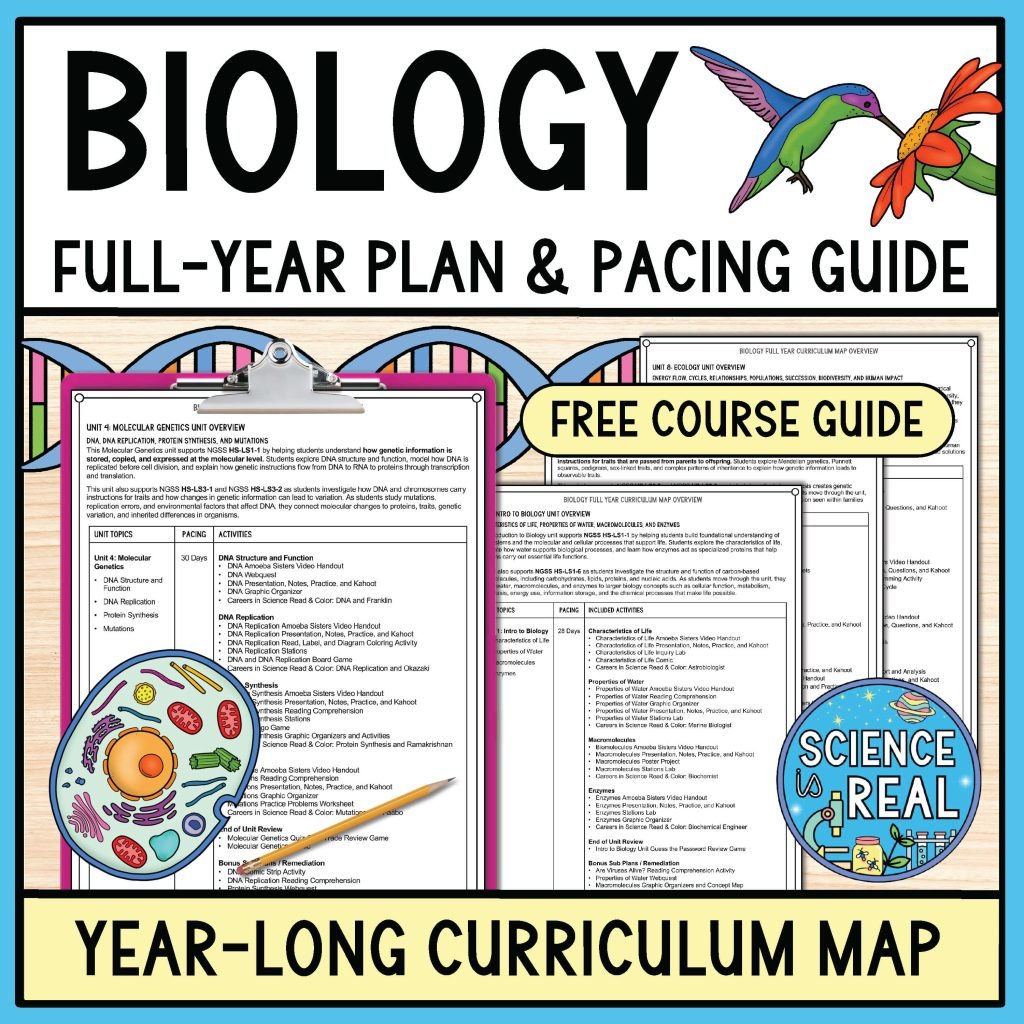
This free biology pacing guide gives you a clear look at how a full year of high school biology can be organized from start to finish.
Inside, you’ll find:
- A full-year biology curriculum scope and sequence
- Suggested pacing for each biology unit
- Major topics covered in each unit
- A unit-by-unit overview of the biology year
- Ideas for where labs, activities, review, and assessments fit
- A clearer picture of how the course flows from one unit to the next
The guide also shows the types of resources included throughout the full curriculum, such as presentations, guided notes, labs, stations, webquests, video handouts, readings, graphic organizers, review activities, assessments, daily lesson plans, warm-ups, tickets-out-the-door, study guides, question banks, sub plans, and remediation options.
The goal is not to lock you into one exact schedule. Instead, this biology pacing guide gives you a flexible starting point that you can adjust for your class periods, standards, student needs, testing windows, holidays, and real school schedule changes.
You Don’t Have to Build Everything from Scratch
The free biology pacing guide can help you see the year more clearly, but the next step is actually gathering or creating the lessons, labs, notes, readings, activities, reviews, quizzes, and assessments.
And that is usually where planning gets time-consuming.
If you want the full year already mapped out with the teaching resources included, my full-year biology curriculum was created to make that process easier. It includes the unit sequence, pacing, daily lesson plans, warm-ups, tickets-out-the-door, presentations, guided notes, labs, stations, readings, assessments, review activities, and more.
The pacing guide gives you the roadmap. The full-year curriculum gives you the lessons, activities, and assessments to teach it.
Want the Biology Resources to Match the Plan?

The free biology pacing guide is a great place to start if you want to map out your year and see how the major units can fit together.
But if you are looking at the guide and thinking, “I love the plan, but I still need the lessons, labs, notes, activities, and assessments,” I have those ready for you too.
My full-year biology curriculum follows this same general sequence and includes the resources you need to teach each unit, including presentations, guided notes, labs, stations, readings, review activities, quizzes, tests, daily lesson plans, warm-ups, tickets-out-the-door, and more.
- Intro to Biology (Macromolecules, Enzymes, Characteristics of Life, Properties of Water)
- Cells (Cells, Cell Transport, Mitosis)
- Cell Energy (ATP, Photosynthesis, Cell Respiration)
- Molecular Biology (DNA, DNA Replication, Protein Synthesis, Mutations)
- Heredity (Meiosis, Mendelian Genetics, Complex Patterns of Inheritance)
- Evolution
- Classification and Taxonomy
- Ecology
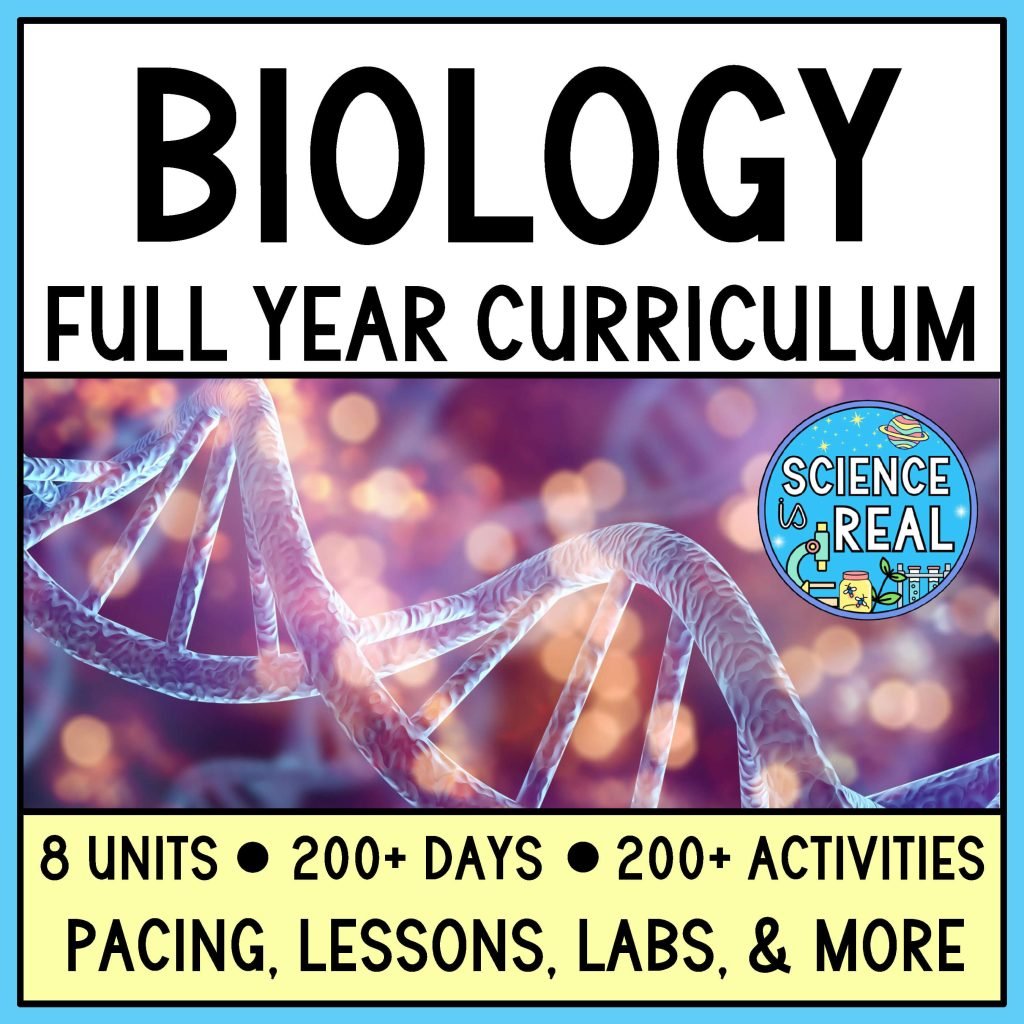
Just walk in and teach. One click and everything is ready for the entire year.
You can use the free biology pacing guide to start planning your year, and if you want the full set of teaching resources to go with it, you can take a closer look at the here in my shop or on TPT
Planning biology will probably never be perfectly neat, because school calendars are not perfectly neat. But having a clear starting point can make the year feel a lot more manageable. I hope this free biology curriculum map and pacing guide helps you zoom out, see the flow of the year, and make planning decisions with a little more confidence and a lot less “what am I teaching next week?” energy.
You may like to explore …
-

Free Biology Curriculum Map and Pacing Guide
$0.00 -
Full-Year Biology Curriculum Bundle
Original price was: $1,194.93.$365.93Current price is: $365.93. -
Intro to Biology Unit – Biochemistry and Characteristics of Life
Original price was: $155.99.$49.99Current price is: $49.99. -
Molecular Genetics Unit – DNA, DNA Replication, Protein Synthesis, and Mutations
Original price was: $149.99.$49.99Current price is: $49.99.