
In this engaging and comprehensive weather unit, students will explore, analyze, and apply their understanding of key atmospheric processes. They will learn how the sun powers all weather on Earth by driving the movement of air masses and the development of high- and low-pressure systems.
$39.24 Original price was: $39.24.$26.99Current price is: $26.99.


In this engaging and comprehensive weather unit, students will explore, analyze, and apply their understanding of key atmospheric processes. They will learn how the sun powers all weather on Earth by driving the movement of air masses and the development of high- and low-pressure systems.
Through interactive lessons, students will analyze how weather fronts form, interpret weather maps, and use real-world data to predict weather conditions. This unit helps students make meaningful connections between scientific concepts and the weather they experience every day.
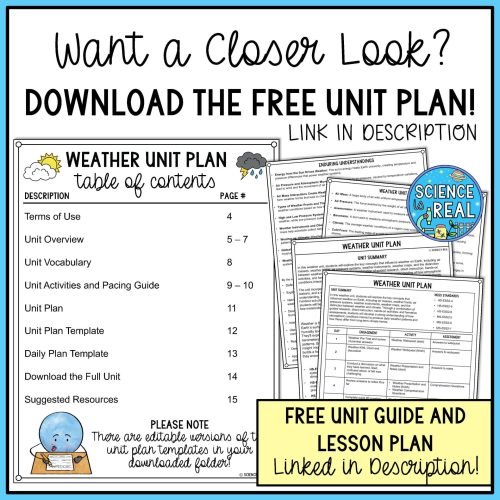
⭐️ Download the Free Weather Unit Plan for closer look!
The 8-day unit also includes both formative and summative assessments to monitor student understanding throughout. Designed to be rigorous, engaging, and standards-aligned, this unit ensures students master key weather concepts through hands-on, inquiry-based learning that brings atmospheric science to life.
No planning and low-prep!
Big Ideas, Standards, Vocabulary, Objectives, Essential Questions, Enduring Understandings, Pacing Guide, Unit Plan, Editable Templates, and More! Impress your administration and save time with this pre-made comprehensive unit plan!
Activate prior knowledge and get an idea where your kids are in their grasp weather topics.
In this engaging weather webquest, students will explore, learn, and apply knowledge about air masses, weather fronts, air pressure systems, and weather maps. Highly interactive and students love it!
• Weather Presentation with Notes and Formative Assessment
This engaging Weather PowerPoint and Google Slides presentation package comes with 50 beautifully illustrated slides, editable students notes, an assessment to use as a comprehension check, and a Kahoot review game.
These student-led weather stations are a great way to get your kids moving and interacting with content in a variety of fun and engaging ways! Students will learn, interact, and explore various weather topics including air masses, air pressure systems, weather fronts, wind, and weather maps.
Students create and analyze a current weather map using a live surface weather map using the provided link. Students draw in and label weather fronts, air pressure systems, and precipitation, and answer analysis question about the map to predict future weather.
• Weather Quiz and Summative Assessment with Question Bank
Choose from a 165-question question bank or use the already made 40-question Weather Test. A 20-question quiz is also included!
SUB PLANS:
• Weather Video Handout – Wild Weather Documentary
This engaging weather video handout is designed to accompany the captivating 58-minute freeBBC documentary,Wild Weather with Richard Hammond, Episode 3:Temperature – The Driving Force. The film explores the essential role temperature plays in shaping all types of weather, from thunderstorms to snowflakes.
REMEDIATION ACTIVITY:
• Weather Reading Comprehension
Students will read about weather fronts, air pressure systems, isobars, and how to read and analyze weather maps. Your students will apply their new knowledge by answering questions throughout the reading portion, analyze a weather map, and complete comprehension questions at the end.
WEATHER AND CLIMATE ACTIVITIES


