This genetic drift lab is a fun, low-prep way for high school biology students to model how chance events affect populations. Using fruit-ring cereal, students simulate genetic drift, gene flow, and changes in genetic diversity. The lab begins with a short background reading that reviews genetic drift, natural selection, and gene flow, followed by simple pre-lab questions to build understanding.
Next, students model and collect data on founder effect, bottleneck effect, and gene flow within their cereal populations. Students then analyze their results and answer post-lab questions to connect their data back to real evolutionary processes. All you need is cereal!
In this hands-on genetic drift lab, each cereal piece represents a fictional Rainbow Rabbit, and each color represents a different gene. As students simulate genetic drift events and gene flow, they see firsthand how allele frequencies change and how genetic diversity can increase or decrease in populations.
GENETIC DRIFT LAB TOPICS:
• Genetic Diversity
• Genetic Drift
• Bottleneck Effect
• Founder Effect
• Gene Flow
• Natural Selection
Materials: For this genetic drift lab, all you need for one group or individual is a 1/2 cup of fruit ring cereal (Fruit Loops). You could also sub out colored candies, but I find that cereal is the most cost-effective way to facilitate this lab with many students. You will also need a napkin, paper plate, and cup for each group. You can reuse the plate and cup.
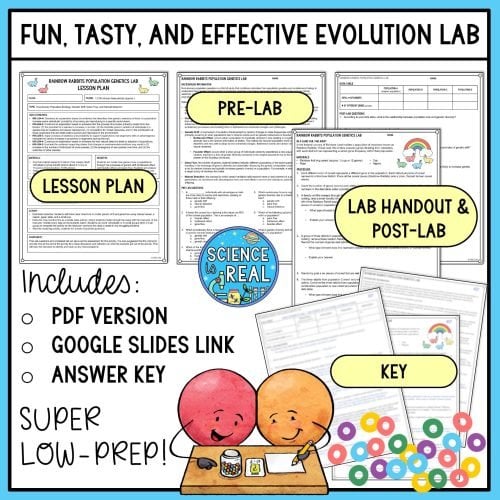
GENETIC DRIFT LAB INCLUDES:
- Teacher’s Guide and Lesson Plan
- Background Reading and Pre-Lab Questions
- Lab Handout with Data Table and Post-Lab Analysis Questions
- Answer Key
- PDF and Google Slides Versions
Low prep and easy to follow – this lab is sure to be a hit in your classroom!
MORE FUN EVOLUTION ACTIVITIES
PURCHASE ON TPT