

Teaching the solar system is one of the best parts of secondary science—because let’s be honest, who doesn’t love talking about giant balls of gas, rogue asteroids, and Pluto’s ongoing identity crisis? ???? But keeping students engaged (and preventing them from orbiting off-task) can be a challenge. That’s where interactive solar system activities come in! Whether you’re introducing the planets, celestial bodies, or space exploration, these hands-on lessons will help your students explore the cosmos without leaving their desks.
Here are six out-of-this-world solar system activities that will ignite curiosity and make space science unforgettable!
1. Solar System Webquest: A Fun, No-Prep Exploration!

Kick off your solar system activities with an engaging Solar System Webquest! This no-prep, student-led activity allows learners to investigate key topics while exploring the wonders of our solar system.
Solar System Webquest Topics:
- The sun, comets, and dwarf planets
- The formation of the solar system and how planets came to be
- Terrestrial, gas, and ice giant planets and their unique features
- The asteroid belt, Kuiper belt, and Oort Cloud
-

Solar System Webquest
$6.99
This interactive webquest requires no prior knowledge, making it an excellent introduction to a unit on space. The Google Slides version features clickable links and pre-formatted text boxes, making it perfect for hybrid learning. It’s also a great option for sub plans, independent study, or makeup work since all resources are free, accessible, and device-friendly!
With this solar system activity, your students will embark on an engaging space adventure while developing research skills and scientific curiosity!
2. Solar System Worksheet: Coloring, Labeling & Questions

If your students enjoy visual learning, this Solar System Diagram and Questions activity is a great way to reinforce planetary knowledge. Students will label and color the major objects in the solar system while also answering descriptive clue-based questions to identify celestial bodies.
What Students Will Learn:
✔ Inner and outer planets
✔ Dwarf planets and major planetary moons
✔ The Asteroid and Kuiper Belt
✔ Halley’s Comet and the sun
This solar system activity is simple yet highly effective for reinforcing spatial relationships within the solar system. Available in both printable and digital (Google Slides) formats, it is a versatile addition to your solar system activities, making it easy to integrate into any classroom setup!

How to Use This Activity:
- Assign the worksheet as an individual or group activity.
Have students color and label as they learn. - Use it for interactive notebooks or review sessions.
3. Free Tour of the Solar System Travel Booklet

What if students could vacation in space? With this creative Solar System Travel Brochure Activity, they will design a travel booklet promoting different locations in the solar system!
Students research and advertise space destinations, including:
- A terrestrial or gas giant planet of their choice
- The asteroid belt, comets, or dwarf planets
- A moon or additional celestial object of their choice
Students will include in their travel brochure:
- Fun and object appropriate attractions
- Weather conditions and what to pack
- Travel tips and safety guidelines for each tour location
- Fun facts about each object in the solar system
This is one of the most creative solar system activities that integrates research skills, space science, and real-world applications! At the end, you can host a Best Space Vacation contest in class! This is one of my favorite solar system activities! Get your free copy of this activity here!
4. Formation of the Solar System Reading Comprehension

To help students explore planetary formation, this reading comprehension activity walks them through the nebular theory and the step-by-step process of how our solar system came to be. This is a great addition to your solar system activities, reinforcing key concepts while building reading comprehension and critical thinking skills.
This formation of the solar system reading comprehension is a guided reading, meaning that the content is chunked with short questions between each subtopic. The reading is accompanied by 2 pages of practice questions.
Formation of the Solar System Topics:
✔ Nebular theory and solar nebulae
✔ Protostars, protoplanetary disks, and planetesimals
✔ Inner and outer planet formation
✔ Characteristics of the inner and outer planets
By incorporating this reading-based approach into your solar system activities, students will gain a strong foundation in planetary formation while improving their analytical and comprehension skills!
Get this activity and more in my Astronomy Reading Comprehension Bundle!

5. Alien Life Hypothesis Challenge: A Cosmic STEM Adventure
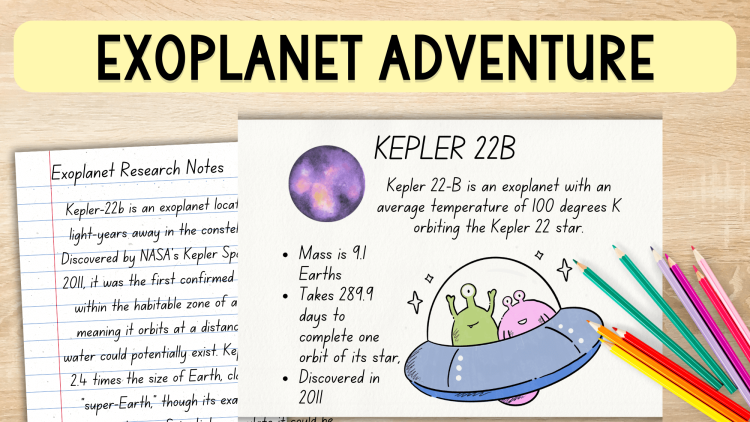
Are we alone in the universe? Spark curiosity and critical thinking in your students with this Alien Life Hypothesis Challenge, one of the most engaging solar system activities! This STEM-based exploration encourages students to research real exoplanets and design a hypothetical alien species that could survive in an extreme extraterrestrial environment.
How to Implement This Mission Challenge:
1. Assign an Exoplanet – Have students select a real exoplanet using websites like NASA Exoplanet Archive or Exoplanet Exploration.
2. Investigate Planetary Conditions – Students analyze the temperature, atmosphere, gravity, and distance from its star to determine habitability.
3. Create an Alien Life Form – Based on their research, students design an alien species adapted to the planet’s unique conditions.
4. Present the Alien – Students can draw their creature, create a digital slideshow, or write a “discovery report” detailing its adaptations.
5. Showcase Their Work – Organize a gallery walk or compile designs into a classroom “Galactic Bestiary”!
This hands-on approach to solar system activities blends science, creativity, and problem-solving, making it an engaging, cross-disciplinary lesson that students will love!
6. STEM Mission: Design a Mars Rover for Exploration

Looking for hands-on solar system activities that engage students in engineering and space exploration? The STEM Mission: Design and Create a Rover to Explore Mars is the perfect way to challenge students to think like NASA engineers while reinforcing space science concepts!
Mission Objective:
After reading the included background reading about conditions on Mars, student will follow a mission directive to design and build a manned Mars rover (on paper) that can withstand the harsh Martian environment and assist scientists in collecting data. Using a combination of over 70 included clip arts, hand-drawn components, or even cutouts from magazines, students will construct a customized Mars rover equipped with four scientific instruments for planetary research.
After completing their rover, students will answer five mission follow-up questions, explaining how their design supports safe exploration and data collection on Mars. With clear step-by-step directions and a detailed rubric, this project is student-led and easy to implement!
I like to display my students’ designs in a gallery walk or have students present their rovers. It’s also fun to host a “Best Mars Rover” contest. This make an excellent group project!
So Easy to Implement!
✔ Engaging, hands-on learning that integrates STEM and space exploration
✔ Easy prep—just print and go! Minimal supplies needed (scissors, glue, paper, colored pencils)
✔ Flexible use: Works as a standalone STEM challenge, space enrichment lesson, or even a sub-plan

This activity has everything you need to bring space exploration and engineering into your classroom. The teacher lesson plan covers standards, objectives, pacing, and materials, while the student handout provides background information, a step-by-step procedure, and analysis questions. A rubric is included for easy assessment. Perfect for astronomy lessons, STEM challenges, or cross-disciplinary activities, this Mars Rover Challenge fosters critical thinking, creativity, and hands-on learning in an exciting way!
7. Build a Scale Model of the Solar System

One of the best ways to help students visualize the vastness of space is through a hands-on activity that allows them to construct a scale model of the solar system. The Exploratorium’s Build a Scale Model of the Solar System activity is a fantastic resource for demonstrating the relative sizes and distances of planets in a way that makes space science more tangible.
Using this activity, students will first calculate a scale to represent the enormous distances between planets. They can use grains of sand, marbles, or sports balls to model each celestial body. After determining their scale, they will map out the solar system, measuring distances and positioning planets accordingly. This can be done in a classroom, hallway, or even outdoors for a more dramatic visual effect. Once the model is complete, students will compare their expectations with reality, leading to discussions about why planetary distances vary so much and how this affects space exploration.
This activity is a great addition to your solar system activities, as it provides a meaningful, interactive approach to understanding astronomical distances. With minimal materials and easy setup, it’s an engaging way to reinforce key concepts in planetary science while making learning fun and memorable. Whether you’re introducing the solar system or reviewing planetary relationships, this model-building activity is sure to captivate your students.
Final Space Thoughts
Teaching the solar system is already a blast (pun intended), but adding interactive, hands-on solar system activities makes it even more out-of-this-world! Whether your students are designing rovers, discovering alien life, or planning their next space vacation, these solar system activities will keep them engaged and excited. Did you know that you can find even more engaging astronomy activities in my shop? Orbit over to check them out!
Need an intro lesson, a sub plan that won’t crash and burn, or an enrichment project? These solar system activities have you covered! Your students will be orbiting with curiosity (instead of zoning out like a distant planet).
???? Which activity are you ready to launch first? Let me know—I’d love to hear how you bring space science to life in your classroom!