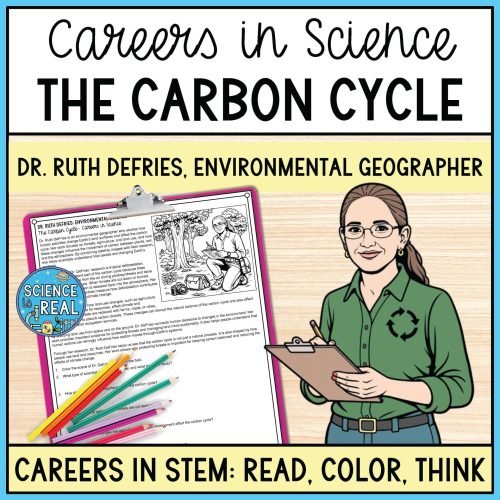
If you’re looking for a meaningful way to connect your biology curriculum to real-world science careers, this Careers in Science: Carbon Cycle Activity is a perfect fit!
This no-prep carbon cycle worksheet introduces students to environmental geographer Dr. Ruth DeFries and helps them explore how human activities affect the movement of carbon through Earth’s systems. Students will connect biology concepts like the carbon cycle, photosynthesis, forests, carbon dioxide, deforestation, land use, agriculture, climate change, biodiversity, and ecosystem services to real scientific work.
I designed this as an easy go-to for early finishers, sub plans, homework, enrichment, or anytime you want to show students how what they’re learning in class connects to real careers in science.
Want more biology career connections like this one? This activity is also included in my Biology Careers in Science Activities Bundle, which includes multiple no-prep worksheets connecting biology topics to real scientists and modern science careers.
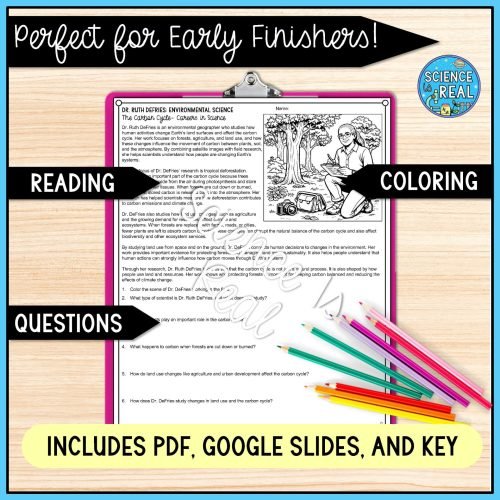
This Careers in Science: Carbon Cycle Activity includes:
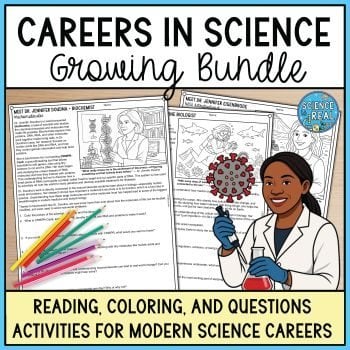
- A student-friendly reading, 4–5 short paragraphs, about a real career in science
- 5–6 thoughtful reflection and comprehension questions
- A fun coloring activity of the scientist working in the field
- PDF, Google Slides, and answer key
This activity fits perfectly when teaching the carbon cycle, photosynthesis, deforestation, land use change, human impacts on ecosystems, climate change, conservation, or Earth systems. Students will learn how Dr. Ruth DeFries uses satellite images and field research to study how forests, agriculture, roads, cities, and other land use changes affect carbon moving between plants, soil, and the atmosphere.
Your students will see that the carbon cycle is not just a diagram of arrows moving between reservoirs. It is a real Earth system that scientists study to understand forests, climate change, land use, and the impact of human decisions on the planet.
GET THE BIOLOGY CAREERS IN SCIENCE BUNDLE
PURCHASE ON TPT